Finance Transformation
Finance Transformation for the Office of the CFO
What Finance Transformation Actually Is
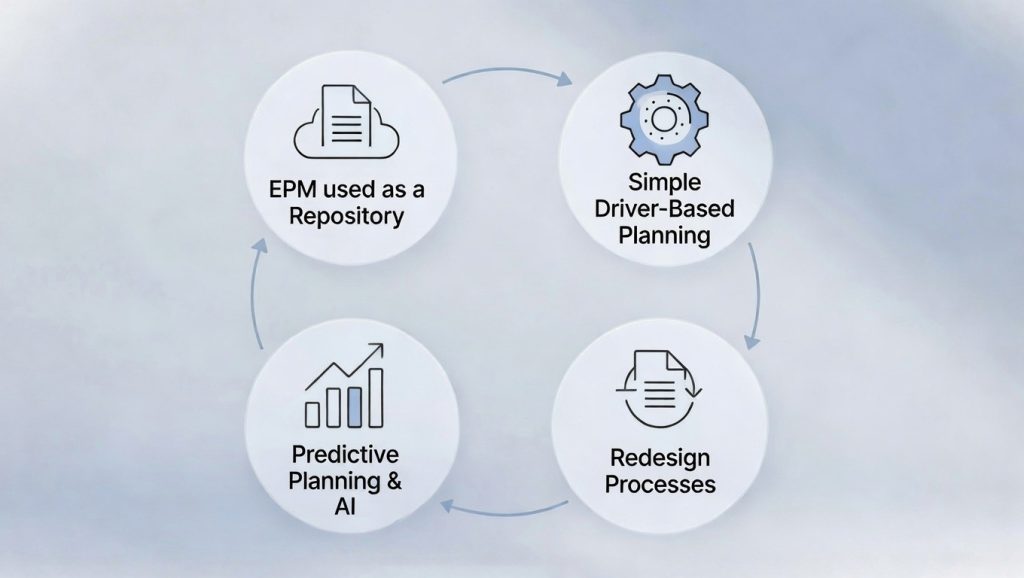
Finance Transformation is the process, operating-model, and people work that determines whether technology investments produce returns. Without it, EPM and AI investments amplify whatever dysfunction already exists in the surrounding workflow.
A pure implementation effort delivers a tool. A transformation effort delivers an operating model with the tool inside it. Most organizations need a version of the second to produce ROI from any meaningful technology investment.
This is the discipline most often skipped because it is the hardest to scope, the hardest to measure in the short term, the most politically uncomfortable, and the most strategically valuable. Most consulting firms sell the technology engagement without the transformation because the transformation is the harder sale. We do both, because the technology engagement without the transformation produces the MIT 95 percent failure rate.
Three Engagement Shapes
We size the transformation work to the actual need. Three options:
Implementation Only (11 to 14 weeks). Technical implementation with informal process and change-management observations flagged for your internal team to address. Fits organizations that have the internal capability to manage the process side.
Transformation Lite (14 to 17 weeks). Technical implementation paired with an MVP-focused process assessment, high-level future-state process flows, and change-management takeaways. Best fit for rapid deployment with iteration after go-live. The most common shape we run.
Full Transformation (24 to 42 weeks). Multiple workstreams, full process and change management. Three phases: Current State Assessment, Future State Design and Prototyping, Build / Test / Train.
What We Work On

FP&A Redesign
Budgeting, forecasting, scenario planning, the cadence of the planning calendar, and the integration with operational planning. The work that turns the planning function from a backward-looking compliance exercise into a forward-looking strategic tool.

Close Cycle Redesign
Days-to-close as a measurable outcome, sub-ledger and consolidation flows, reconciliation processes, and the accounting team’s operating rhythm. Close cycle is one of the most visible metrics of finance organization health. Reducing it has compounding benefits across the whole operation.

Profitability and Allocations
Activity-based costing where it earns its keep, simpler allocation methods where it does not, and the integration with management reporting. Profitability is the data layer most CFOs wish they trusted more. We build the methodology and the operating discipline that earns that trust.

Operating Model Design
The shape of the finance function itself. Centralized versus decentralized, shared services design, the boundary between Finance and the business. The structural decisions that determine whether finance can support the rest of the company strategically or whether it remains in a transactional posture.